
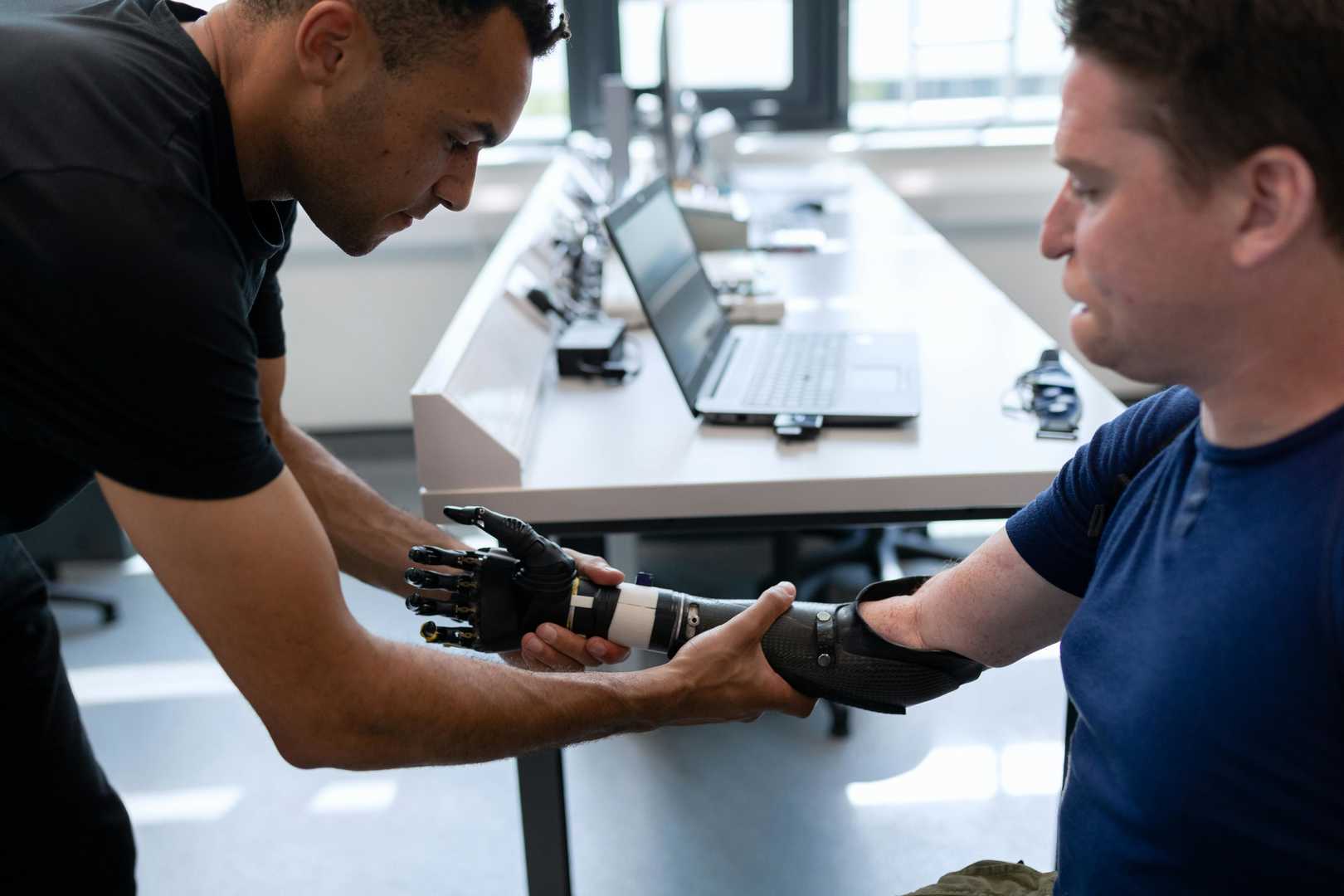
The healthcare industry is rapidly evolving, with smart technology pivotal in enhancing patient care. In 2025, advancements in artificial intelligence, wearable health devices, and telemedicine are revolutionizing diagnostics, treatment, and patient monitoring. These innovations improve efficiency, reduce medical errors, and offer personalized care solutions.
In this article, we will analyze the smart healthcare tech trends shaping a future where patients receive faster, more accurate, and accessible medical services.
AI-Powered Diagnostics for Quick and Precise Results
AI-powered diagnostics are transforming healthcare by enabling prompt and more precise disease detection. These diagnostics use machine learning algorithms to analyze medical images, lab results, and patient data with better accuracy while reducing human errors.
As per Deloitte’s Health Care Consumer Survey of 2023, around 53% of respondents believe AI in diagnostics can provide better healthcare access. Also, 46% of respondents said it can make healthcare more affordable. Those who have encountered AI in their diagnostics are even more optimistic about AI.
AI in radiology detects early cancer signs in mammograms and CT scans. Platforms like IBM Watson analyze medical data to diagnose complex diseases, while PathAI improves pathology accuracy. By automating diagnostics, AI enhances efficiency and patient outcomes.
Remote Patient Monitoring and Wearable Health Tech
Wearable health devices and remote monitoring are revolutionizing healthcare by enabling constant tracking of vital signs outside traditional clinical settings. Devices like smartwatches, ECG monitors, and glucose sensors collect real-time data on heart rate, oxygen levels, and blood sugar. One standout innovation in this space is The Neural Cloud’s MaxYield Product, which exemplifies the growing capabilities of wearables with ECG technology. It helps in alerting both patients and doctors to potential health issues by providing advanced, continuous cardiac monitoring and predictive health insights.
A study by the National Institute of Health reveals that one-third of Americans use a wearable device. They wear a smartwatch or band to track their health, vitals, and overall fitness. Also, 80% share this information with their doctors for better health monitoring.
Wearable devices like the Apple Watch detect irregular heart rhythms, while the Dexcom G7 monitors glucose levels for diabetics. RPM platforms integrate this data with AI-driven analytics to enable early interventions and personalized treatments. This enhances patient care, reduces hospital visits, and improves chronic disease management.
Can remote monitoring reduce hospital visits and emergency room admissions?
Yes, it can help by detecting health problems promptly and enabling timely interventions. Continuous tracking of vital signs through wearable devices helps manage chronic conditions and complications that require urgent care. This proactive approach enhances patient outcomes while reducing healthcare costs.
Advanced Cleanroom Technology for Infection Control
Advanced cleanrooms are critical in controlling infection by maintaining sterile environments essential for medical and pharmaceutical applications. These controlled spaces use high-efficiency particulate air (HEPA) filtration, antimicrobial surfaces, and automated airflow systems to minimize contamination.
According to American Cleanroom Systems, ISO 14644 standards are used to classify cleanrooms based on airborne particle levels to ensure sterility. This standard is essential for maintaining high medical norms and preventing contamination-related complications in sensitive healthcare settings.
ISO 14644 cleanrooms, set by the International Organization for Standardization (ISO), ensure safety in hospitals, labs, and pharmaceutical manufacturing. They prevent infections, support sterile drug preparation, and enhance medical device production. In healthcare, they play a vital role in reducing hospital-acquired infections (HAIs).
What are the latest advancements in air filtration for medical cleanrooms?
The latest advancements include high-efficiency particulate air (HEPA) and ultra-low penetration air (ULPA) filters, advanced UV-C disinfection, and electrostatic filtration. These technologies enhance contamination control by removing airborne pathogens, improving sterility, and reducing infection risks in critical healthcare environments like surgical suites and labs.
Robotics and Automation in Surgery and Patient Care
Robotics and mechanization are revolutionizing surgery and patient care by enhancing precision and minimizing human error. Robot-assisted surgery, like the da Vinci Surgical System, enables minimally invasive procedures with high accuracy. Inpatient care, autonomous robots help with medication delivery, disinfection, and even patient mobility.
According to Strategic Market Research, people have now accepted robotic surgery as a reasonable option for multiple medical operations. Between 2012 and 2022, the number of robotic surgical procedures increased by 25% annually. Robotic surgery is more commonly used for thyroid and prostate cancer.
Advanced AI-driven robotics now perform complex tasks with real-time decision-making, but they still require human oversight. While automation improves efficiency, it cannot replace human expertise in critical decision-making and compassionate care. This makes robotics a powerful tool rather than a full replacement for medical professionals.
What are the cost implications of using robotics in healthcare?
Robotics in healthcare involves high initial costs for acquisition, installation, and training. Thus it is expensive for many facilities. However, it can reduce long-term expenses by improving surgical precision and shortening hospital stays. Over time, increased efficiency and better patient outcomes help offset the investment, which makes robotics a valuable but costly innovation.
Blockchain for Secure and Transparent Health Data Management
Blockchain technology is transforming health data management by ensuring safety, transparency, and interoperability. It creates decentralized, tamper-proof records and reduces the risk of data breaches and fraud. Smart contracts automate compliance and streamline data sharing between healthcare providers while maintaining patient privacy.
Statista reported that there were 491 big-scale data breaches in healthcare centers in the US in the first 3 quarters of 2024. This resulted in the loss of over 500 records. The number of data breaches has considerably increased in the last decade. The highest number of such incidents was recorded in 2023, with 745 cases.
Platforms like MedRec and IBM Blockchain have enabled secure access to medical histories. Blockchain removes intermediaries, cutting costs and boosting trust in digital health. It secures patient data, enhances accessibility, and improves care coordination.
Personalized Medicine and Gene Editing Innovations
Customized medication and gene editing are revolutionizing healthcare by tailoring treatments to individual genetic profiles. Advances like CRISPR-Cas9 allow precise DNA modifications and potential cures for genetic disorders such as sickle cell disease and cystic fibrosis.
Personalized medicine uses genetic testing to customize drug therapies, improve efficacy, and reduce side effects. For example, CAR-T cell therapy modifies a patient’s immune cells to target cancer more effectively. These innovations enhance treatment precision, minimize trial-and-error prescribing, and pave the way for groundbreaking medical solutions, which makes healthcare more effective and patient-centered.
Embracing the Future of Healthcare Innovation
Cutting-edge technologies like AI, robotics, blockchain, and gene editing are transforming healthcare into a more efficient, precise, and patient-centered system. As these advancements evolve, the potential for improved outcomes, enhanced patient care, and greater accessibility becomes even more promising.
To fully realize these benefits, robust security measures must advance alongside innovation. With the growing prevalence of connected devices and smart systems, the risk of cyber threats also increases, which means these threats could potentially undermine the benefits these technologies offer. Therefore, medtech cybersecurity tends to play a crucial role in ensuring that new technologies remain safe, compliant, and resilient against emerging threats.
Innovations in predictive analytics, personalized medicine, and remote monitoring further strengthen healthcare’s future. With continuous progress, these technologies will redefine medical practices for years to come.